Bristol’s Misérables

The soldiers and sailors of Stapleton prison

Chris Bowkett’s talk focuses on the untold history of Stapleton Prison, the home of captured soldiers and sailors during the French Revolutionary and Napoleonic wars. Using stories of the prisoners themselves, this talk reveals the surprising amount of freedom offered to Britain’s “enemies” whilst in captivity, contrasted with their biggest problem: boredom. This talk covers both the inventive and self-destructive ways “the miserables” occupied their time at His Majesty’s pleasure.

Mozambique at 50

A LUTA CONTINUA!

BRHG brings together a selection of posters of the Mozambican Revolution from the ‘Our Sophisticated Weapon’ exhibition and other archival material relating to the campaign for independence and the ensuing civil war. Speaker: 11.30am - Dave Spurgeon will guide you through the exhibits. Dave will provide a brief history of Mozambican independence, how it supported and inspired liberation struggles across Southern Africa and the price it paid which impacted its own development. He will identify […]

The one road

From Bristol to Dublin

A walk though time and space with Mark Steeds, covering no less than 1,500 years of Bristols historic connections with Dublin and featuring Saints and Sinners, Roundheads and Royalists, Colonists and Criminals, Transportees and Treachery, Merchants and Murders… From the efforts of Wulfstan in 1090 to ban the trade in Anglo Saxon slaves with the invading Vikings in Dublin, via the Easter Monday massacre of 1209 in Killin Woods, outside of Dublin, when 500 new settlers from Bristol were attacked […]

Hartcliffe Betrayed

The fading of a post-war dream

Paul Smith’s talk will draw on his research into the history of Hartcliffe, designed by planners in the 1940s on the garden city model, built as a housing estate in the 1950s. This tale of the steady removal of planned facilities and the reduction in the quality of homes presented huge challenges to a community of ‘pioneers’ exported to the outskirts of the city. The story of Hartcliffe was repeated across the country as estates were built on the edges of towns and cities. This story has […]

Red Notes Choir

Catch Bristol’s wonderful Red Notes Choir, who will support the Bristol Radical History Festival by performing at 11:30am. They’ll be singing in the Ground Floor Foyer by the M Shed main entrance. The Red Notes Choir is a Bristol-based socialist choir. They have a repertoire of songs from around the world on historical, union, peace, green and human rights themes. We use the streets of Bristol and further afield to spread our message of fighting for the rights of working people, those who are […]

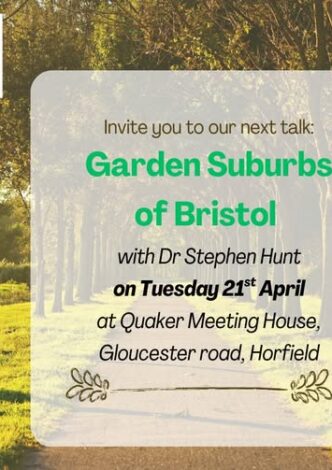
Bristol’s garden suburbs

A critical celebration

Steve Hunt, author of Bristol Radical History Group book, Yesterday’s To-morrow: Bristol’s Garden Suburbs, will tour us through the principles and practical impact of the garden-city movement in our city. The 1918 Tudor Walters Report came with the well-known aspiration to build “homes fit for heroes” after the First World War. The interwar council housing boom that followed shaped much of the development of Bristol as we know it today. It aimed to create new neighbourhoods based on high-quality […]

‘A Fitting Receptacle for the Depraved and Abandoned’

Rethinking Punishment at Bristol’s New Gaol, 1816–1831

Bristol’s new gaol on Cumberland Road first opened its doors for business in 1820. Ambitiously conceived as a modern alternative to the crumbling, insecure and insanitary old prison at Newgate, the architects of the New Gaol sought to turn punishment into a science. Systems of hard labour, a treadwheel, constant surveillance, segregation, religious instruction and minimal interpersonal association were intended to target prisoners’ minds as well their bodies. The New Gaol’s reputation amongst […]

‘Returning the favour’

Irish trade unions' support for the striking miners in 1984

During the strike, in response to the horrific images of miners and their supporters being battered by the police, donations of cash were received from around the world, More money was raised in Ireland per head of population than anywhere else, Britain included, with many support groups being set up to 'adopt' individual mining communities. The story is told of one elderly woman in Dublin putting a £10 note, a large proportion of her pension, into a collection tin. She said it was to repay the […]

CND Demands a Continuing Supply of History

We have a selection of posters, photos and printed materials from the early 1980s when Ronald Reagan and Margaret Thatcher agreed to siting US Cruise missiles in the UK at the same time as the Soviet Union was deploying its new SS20 missiles in Eastern Europe. There was anger and anxiety across Europe, rejuvenating the anti-nuclear movements and triggering huge protest demonstrations. The membership of CND in Bristol and across the UK expanded rapidly and the new energy and ideas transformed the […]

Up the Archives

Housing, Gaols and Mozambique

  Join our historians in the Bristol Archives Education Room to view original maps and documents from the special collections. We have materials on the three of the themes at the Bristol Radical History Festival: Incarceration: The plans for Bristol gaols in the eighteenth and nineteenth centuries, including those that were never built, giving a fascinating insight into prison design and purpose in the period. Prof. Steve Poole will guide us through so-called 'the fitting receptacles of the […]